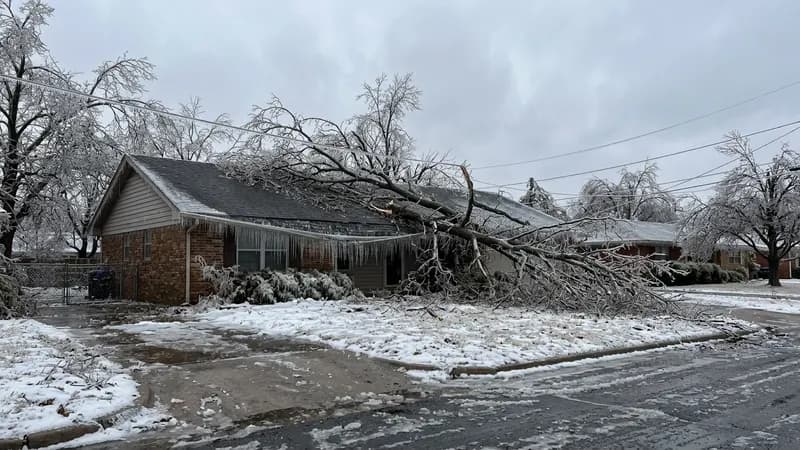
What to Do in the First 48 Hours After a Tulsa Hailstorm
The first 48 hours after a Tulsa hailstorm decide how well your roof recovers. Here's what to do — in order — to protect your home, your family, and your budget.

The first 48 hours after a Tulsa hailstorm are decisive. The actions you take — or skip — in those two days determine whether your home avoids secondary water damage, whether you discover hidden damage before it becomes a leak, and how much the eventual repair costs you. Most homeowners make at least one avoidable mistake in this window, often because there's no obvious damage to look at and the temptation is to wait and see.
This is the protocol we'd hand to family. Step by step, in order, with the reasoning for each step.
If the inspection shows the roof is past saving, our page on hail damage roof replacement in Tulsa explains how a full replacement after a hailstorm is scoped and documented.
Hour 0–4: Immediate safety and documentation
Once the storm passes and the area is safe:
- Make sure everyone is safe first. Check on family, neighbors, especially elderly residents. After major Tulsa events (the 2013 Memorial Day storm, the April 2020 hail event), older neighborhoods like Cherry Street and Brookside often had isolated injuries from broken windows and falling debris. Safety first.
- Walk the perimeter of your property — from the ground.Don't climb the roof. Look up. Take photos of your roof, gutters, downspouts, AC unit, vehicles, and any visible damage. Document the timestamp.
- Photograph the ground. Hail accumulation in the yard, granules in the driveway or splash blocks, branches and debris. All of it. Time-stamped photos establish exactly what the storm did.
- Note hail size if possible. Compare to a coin or a golf ball. Measure if you have anything to measure with. Hail size is a major factor in how much damage to expect.
- Check for active leaks indoors. Walk every room, especially upper-floor ceilings, attic if accessible. Active leaks need immediate response — call a pro before water damage compounds.
Hour 4–24: Professional inspection and emergency response
Once initial documentation is done:
- Call a local roofer for a no-obligation inspection.Not the storm chasers knocking on your door. Call a local Oklahoma-CIB-registered contractor. The inspection is no-obligation, takes about an hour, and produces a written record of the roof's condition.
- If there's active water intrusion, call for emergency tarping first. Tarping is typically same-day, prevents secondary damage, and keeps a roof problem from becoming an interior one. See our emergency tarping service for what proper tarping involves.
- Don't sign any contractor contracts yet. Storm chasers will push for signatures within the first 24–48 hours. The professional move is to get one or two inspections, get documented quotes, and only then commit. Real contractors will give you time.
- Take more photos. Anything that develops — interior leaks appearing, more debris discovered, additional damage you initially missed. The documentation builds over the first few days.
- Move belongings out of leak paths. If anything is leaking, get books, electronics, important paperwork off the floor and away from drip points.
Hour 24–48: Get documented quotes and make a plan
With the inspection done and the roof stabilized, this is the window to plan the repair — without pressure.
- Read your written inspection report. A good roofer hands you a report with photos organized by slope. Understand what was found before you commit to anything.
- Get one or two documented estimates. Compare the scope and the materials in writing — not a number scrawled on the back of a business card at your door.
- Ask about material options. If the roof needs replacing, this is the moment to weigh a Class 4 impact-resistant upgrade — the material that stands up to the hail that just hit you.
- Take your time on the decision. A roof is a five-figure decision. Any contractor pressuring you to sign within 48 hours is telling you something about how they operate.
What to avoid in the first 48 hours
- Don't climb the roof yourself.Damaged decking, wet shingles, possible structural issues — it's genuinely dangerous. We've had homeowners injured trying to assess damage independently.
- Don't sign with door-to-door contractors. Real contractors don't cold-canvass after storms. The ones who do are almost universally out-of-state operators who'll be gone before any problem surfaces. See our guide to spotting Tulsa roofing storm chasers.
- Don't throw away damaged materials.Hail-shed granules, broken shingle pieces, damaged gutter sections — keep samples. Don't clean up the evidence before the inspection happens.
- Don't guess at the damage.Trust the professional inspection over a gut feeling. “The roofer found hail impact damage across all four slopes” is worth far more than “I think we got hit pretty bad.”
- Don't pay a large sum upfront. A reasonable deposit is normal; a contractor demanding most of the money before any work happens — especially in cash — is a classic storm-chaser move.
Real-world example: a recent Bixby case
Last spring, a Bixby homeowner in the Stone Creek subdivision called us 18 hours after a Saturday-night hailstorm. They had ground-photographed accumulated hail and bent gutters, and hadn't signed with any of the three storm chasers who'd already knocked. Our inspection found mat fractures across all four slopes and granule loss in every gutter — the kind of distributed damage that means replacement, not a patch.
Because they'd documented the storm early and hadn't rushed into a contract, they had a clear written record of the roof's condition and time to choose their material calmly. They opted for a Class 4 impact-resistant replacement — the roof most likely to shrug off the next Tulsa hail event — and the project was completed within a few weeks.
That outcome wasn't accidental. It came from documentation, timing, and not signing with the first contractor who knocked.
Why waiting costs you
There's no rush to sign a contract — but there is a cost to ignoring storm damage. Hail damage is progressive: granules keep shedding, small mat fractures open wider with each freeze-thaw cycle, and a roof that only leaked a little in April can be soaking your decking by August. What starts as a roof problem becomes an insulation, drywall, and mold problem.
The move is simple: document early, get the roof inspected within a week or two, stabilize anything actively leaking, and then take your time choosing how to repair it. Waiting to document is what costs you; taking your time on the decision doesn't.
Summary checklist
For quick reference:
- Hour 0–4: Safety check, perimeter documentation, ground-level photos, indoor leak check.
- Hour 4–24: Call a local roofer for a no-obligation inspection, emergency tarping if needed, no contractor signatures yet.
- Hour 24–48: Read the inspection report, get one or two documented estimates, weigh material options.
- Days 3–14: Choose your contractor and materials; schedule the work.
- Days 14–42: Installation, cleanup, and final walkthrough.
If you've had a recent Tulsa-metro hailstorm and aren't sure what to do next, call us. No-obligation inspection and honest guidance on whether your roof needs replacing yet.