Ice Storms and Your Roof: What a Tulsa Winter Can Do and When It Means a New Roof
Hail gets the attention, but a Tulsa ice storm can do just as much to a roof, mostly through the trees above it. Here is what to check and what to plan for.
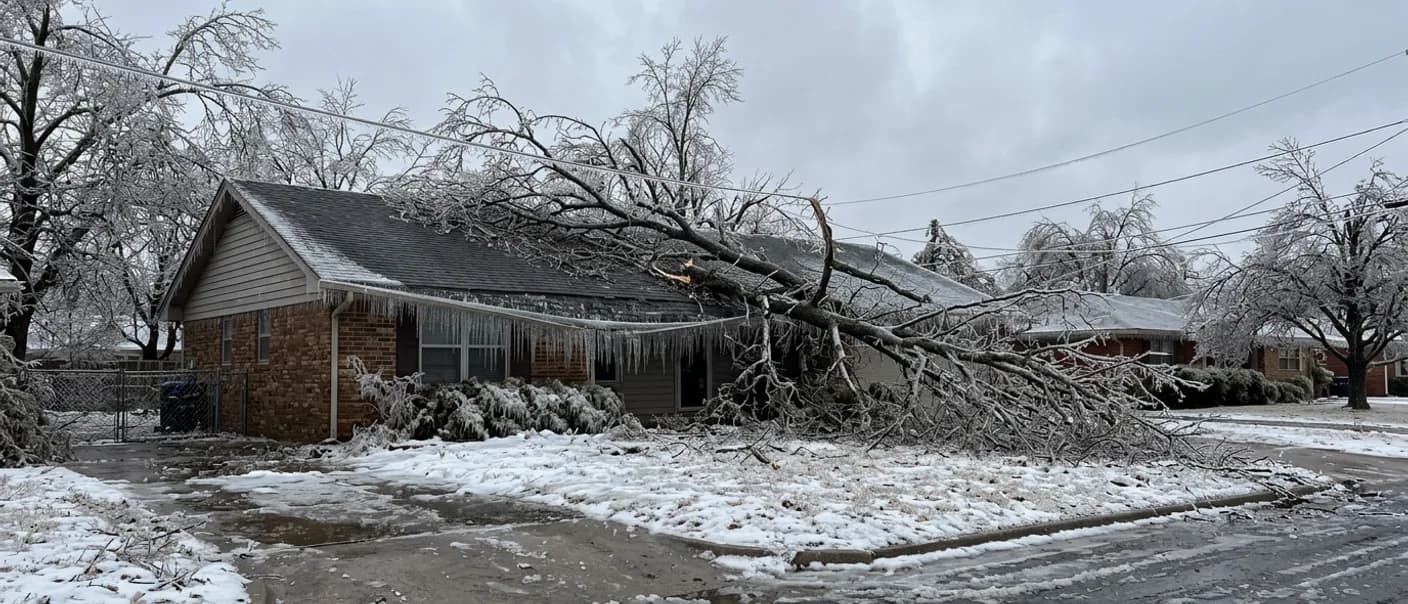
Tulsa roofs are built and inspected with hail and wind in mind, and for good reason. But Green Country also gets ice storms, and when one settles over the metro the damage to roofs looks different from a spring hailstorm. It is less about the shingles being struck and more about what the ice does to everything around and above them.
Oklahoma's December 2007 ice storm is the one most Tulsa homeowners remember: trees across the city split under the weight of ice and power was out for days to weeks in many neighborhoods. Smaller ice events come through far more often. Here is what they do to a roof, what to check afterward, and when the answer is a full replacement.
How ice storms damage Tulsa roofs
Falling limbs.This is the big one. Ice can multiply the weight of a tree's branches, and the mature oaks, elms and pecans over older Tulsa neighborhoods such as Maple Ridge, Brookside and Florence Park hang directly over roofs. A heavy limb can crack shingles, break rafters or punch straight through the decking.
Gutters and edges. Ice-filled gutters get heavy enough to pull away from the fascia, sometimes taking the drip edge and the first course of shingles with them.
Ice at the eaves. Ice dams are less common here than in the northern states, but they do form on poorly vented attics when snow or ice sits on a roof for several days. Meltwater backs up under the shingles and shows up as stains on ceilings and the tops of outside walls. Our guide to roof ventilation in Tulsa explains why the attic matters.
Brittle old shingles. Asphalt shingles get stiffer in the cold, and on a roof that is already near the end of its life, the freeze, the weight and the thaw can finish off seal strips and crack tabs that were holding on.
What to do after an ice storm
- Stay clear of downed lines and hanging limbs. Report downed power lines to the utility and do not go under a tree that is still loaded with ice.
- Look from the ground and from the attic. Check for limbs on the roof, sagging areas, torn gutters and, inside, daylight or wet decking. Stay off the roof itself.
- Photograph everything before limbs are cleared, including where each limb landed.
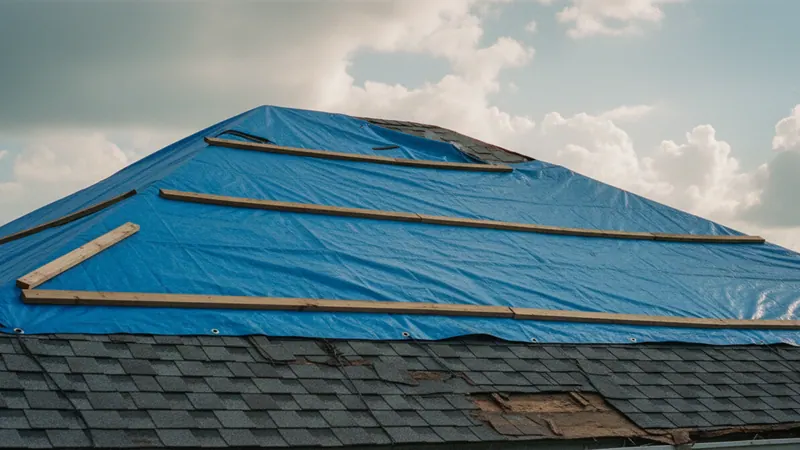
- Cover any opening. If a limb went through, get the hole covered as soon as it is safe. See emergency tarping.
- Have the roof inspected once the ice is gone, including the decking under any impact point.
When ice storm damage means a new roof
One limb strike on a young roof is usually a localized fix: replace the broken decking and rafters, then the roofing over that area. A full replacement starts to make sense when:
- Limbs hit more than one slope, or the decking is damaged across a wide area.
- The roof was already 15 years old or more, so new shingles will not match the old ones.
- Gutters and edges tore away along long runs and took the shingle edges with them.
- Water got into the attic and soaked insulation and decking over several days.
If you are heading toward a replacement anyway, it is a good moment to plan for Tulsa's other threat too. Our storm damage roof replacement page covers how a full replacement after severe weather is scoped, and Class 4 impact-resistant shingles explains the upgrade most Tulsa homeowners consider for the next hail season.
Before the next one
- Have an arborist look at large limbs that hang over the roof.
- Keep gutters clear in late fall so they are not already full when ice arrives.
- Check attic ventilation and insulation, which keep ice from building at the eaves.
- Photograph the roof and gutters on a clear day each fall, so you have a before picture.
If an ice storm has already brought limbs down on your roof, call and we will connect you with a local roofer who can assess the damage and tell you whether it is a fix or a full replacement.