Architectural vs. Three-Tab Shingles: What the Difference Means in Tulsa
Most new Tulsa roofs now go on with architectural shingles. Here is why that shift matters in wind, hail and summer heat.
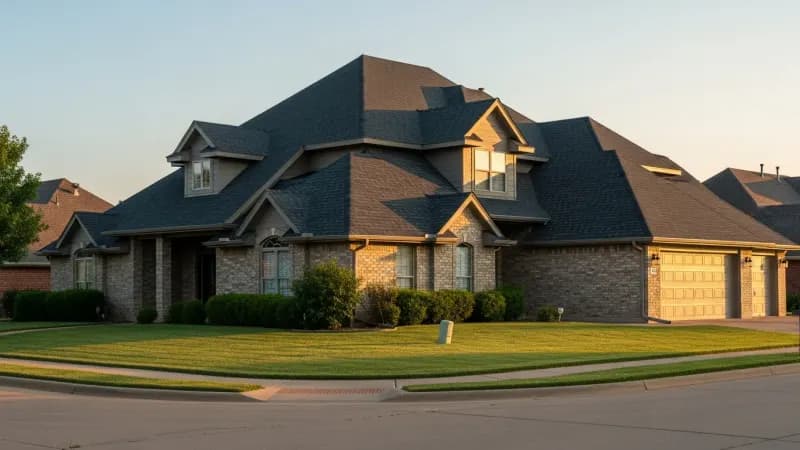
Walk through a Midtown Tulsa neighborhood built in the 1960s and look up. Many of the original roofs were flat three-tab shingles laid in neat rows. Drive through a Broken Arrow or Bixby subdivision built since 2005 and nearly every roof is architectural, with the thicker, shadowed look.
That shift happened for reasons that matter a lot in Tornado Alley.
What Each One Is
Three-tab shingles are a single layer of asphalt mat with two slots cut into the bottom edge, making three equal tabs. They lie flat and form a regular grid.
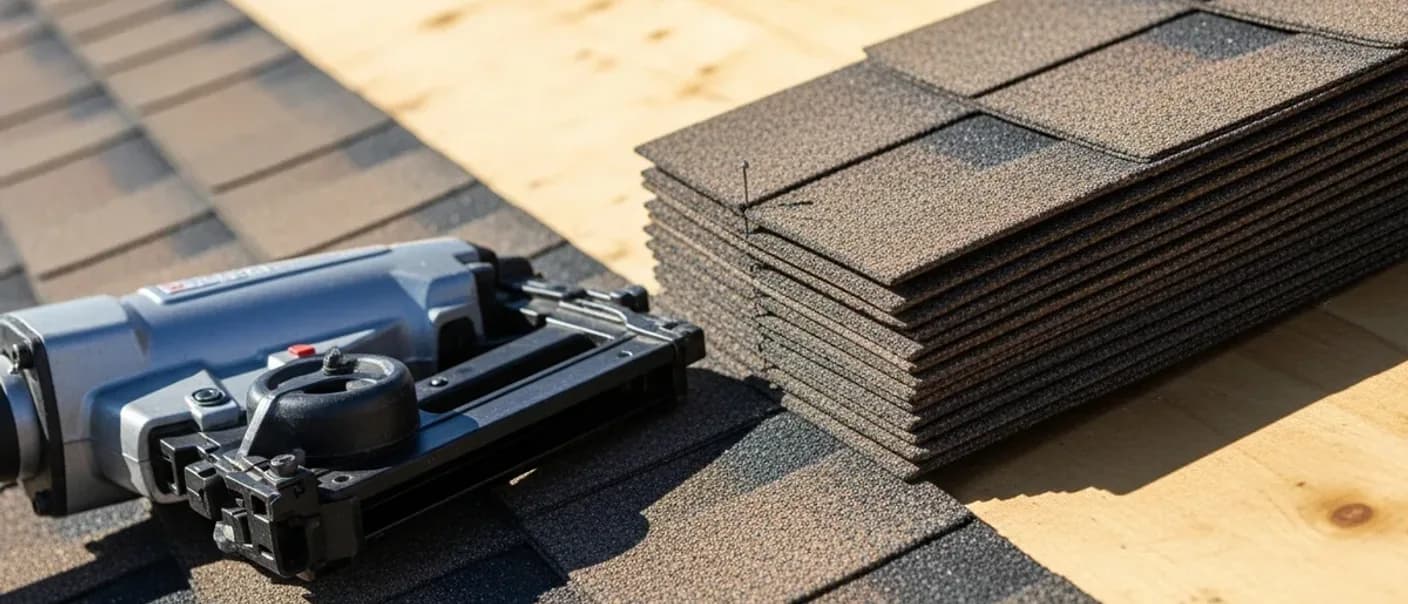
Architectural shingles (also called dimensional or laminated) bond two or more layers together, with an uneven bottom edge. The result is a thicker shingle with depth and shadow lines that read a little like wood shakes from the street.
Why the Difference Matters in Tulsa
Wind.Straight-line winds ahead of spring storms routinely gust past 60 mph across the metro. Shingles fail in wind when the tabs lift and the seal strip lets go. The cut tabs of a three-tab shingle give wind an easy edge to catch. A laminated shingle has no cutouts in its upper layer and more mass to hold it down, and most architectural lines carry higher wind classifications when installed with the maker's full nailing pattern. See wind damage and your roof.
Hail.A thicker shingle absorbs a little more of a hailstone's impact, but thickness alone is not an impact classification. If hail is the concern, the comparison that matters is standard versus Class 4 impact-resistant, and most hail-resistant shingles are architectural.
Heat. Tulsa summers bake asphalt and drive off the oils that keep it flexible. Thin three-tab shingles tend to curl and crack sooner under that cycle. See why Tulsa roofs age faster.
Side by Side
- Layers: three-tab is one; architectural is two or more.
- Look: flat grid versus textured, shadowed courses.
- Weight: architectural is heavier per bundle.
- Wind: architectural lines usually carry higher classifications.
- Service life: makers generally expect architectural shingles to last longer.
- Impact class: available as Class 4 in many architectural lines; rare in three-tab.
When Three-Tab Still Comes Up
Three-tab is sometimes used on detached sheds and outbuildings, or to match an existing roof on part of a house. On a whole-house replacement in the Tulsa metro, it is now an unusual choice, and mixing the two types on the same roof plane looks uneven because they lie differently.
Choosing a Line and Color
- Decide on impact class first, then pick a color within that line.
- Look at full-size sample boards outside, not brochure chips.
- Check HOA rules before ordering; see HOA approval for a new roof.
- Think about heat; see roof color and Tulsa heat.
- Make sure starter strip and ridge caps come from the same product family.
For metal and other alternatives, see roofing materials for Tulsa's climate.