Roofs in Tulsa's Historic Preservation Zones
Gillette, Brady Heights, Swan Lake and other Tulsa districts need an HP permit before exterior changes. Here is how the process works.
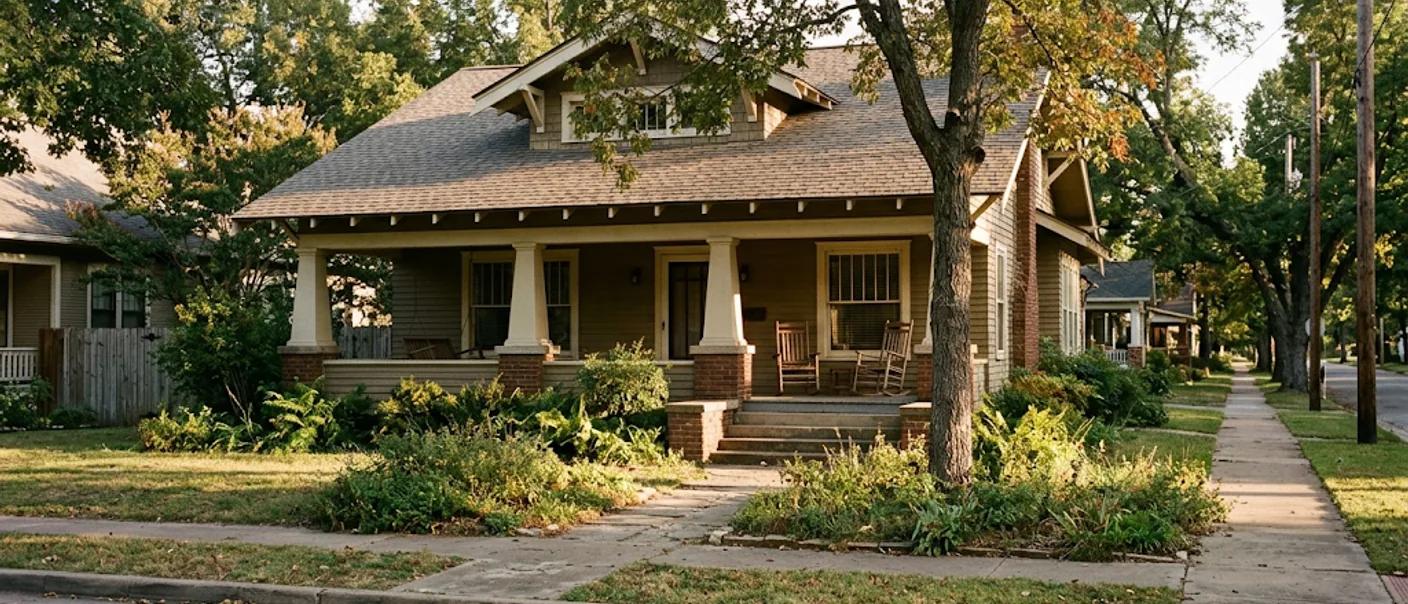
Short answer: if your house is in one of Tulsa's Historic Preservation (HP) overlay districts, the Tulsa Preservation Commission says you need an HP permit before changing the outside of the property, even when the city does not require a building permit. Apply before you sign a roofing contract, not after.
Which Neighborhoods Have HP Zoning
The Commission's overlay district page lists the neighborhoods and sites approved for HP zoning, with the year each was approved:
- Gillette (1989)
- Council Oak Tree Site (1992)
- North Maple Ridge (1993)
- Swan Lake (1994)
- Yorktown (1995)
- Brady Heights (1999)
- Elmwood, the Patrick J. Hurley Mansion (2015)
- Tracy Park (2022)
Note that this is a narrower list than the Midtown areas people usually call historic. Cherry Street, Brookside and Florence Park, for example, are not on it. Our guide to roofing older Tulsa homes covers those neighborhoods from the roof-construction side.
What the Commission Says Applies
The Commission describes the HP permit process as mandatory. Owners and residents must obtain an HP permit before making changes to the exterior of the property, even if no building permit is required. The permit is administered by the Tulsa Preservation Commission, and proposed work is measured against the design guidelines for your neighborhood.
The Commission's pages do not name roofs specifically, and they do not say whether replacing a roof with the same material is handled differently from a change in style or material. That is a question for Commission staff. It is better to ask than to assume, because the permit comes before the work.
How the Process Works
- Check the zoning map to confirm the house is in an HP Overlay District.
- Read the design guidelines for your neighborhood. The Commission encourages owners to contact its staff at this stage.
- Prepare the proposal, including drawings or photos of the finished work. For a roof, that means the material, color and profile you want.
- Submit the application to Commission staff.
- Staff presents it to the HP Subcommittee, which decides whether it is complete and recommends an action. A typical application then goes to the full Commission, which votes to approve or deny.
The Commission says an approved permit is typically issued within a few business days, but it gives no timeline for the meetings themselves. Owners are expected to attend, and the public is welcome. Build the meeting schedule into your plans, because the roof date depends on it.
Practical Steps Before You Choose a Roofer
- Find out whether the address is HP-zoned before you start talking to roofers.
- Tell every roofer up front that the house is in an overlay district, so the proposal matches the guidelines.
- Decide on the shingle style or material first. Changing it after approval can mean going back through the process.
- Keep the approval with your house records. It also helps if you sell.
If you are comparing materials for an older house, see architectural vs three-tab shingles. If a homeowners association also has rules, see HOA approval for a new roof. For the Midtown side of town generally, see our Midtown Tulsa service area page.
Official details, the zoning map link and neighborhood guidelines are published by the Tulsa Preservation Commission.
What to Bring to the Conversation
Commission staff can answer questions faster when you arrive with specifics. Have the street address, the current roof material and color, and a few clear photos of the house from the street. Know roughly what you want to install: the shingle line, color and profile, or the alternative material you are considering. If the roofer has a written scope, bring it. Staff cannot approve a vague idea, but they can tell you what the guidelines expect and what drawings or product information the application needs.
Why the Timing Matters
Roofing contracts usually come with a start date, and a material order is often placed soon after signing. An HP permit that has not been issued yet can stall both. Put a clause in the agreement that the start date depends on the HP permit, so you are not pressed to proceed before approval. A good roofer working in an overlay district will already expect this. If a roofer tells you the permit is unnecessary and the Commission has not told you so, treat that as a reason to call the Commission yourself.
See also our guide to the new roof scope checklist for what to put in writing.