How to Prepare Your Tulsa Home for a Full Roof Replacement
The work starts before the first shingle comes off. Plan the driveway, household access, pets, and fragile belongings with the installer ahead of delivery.
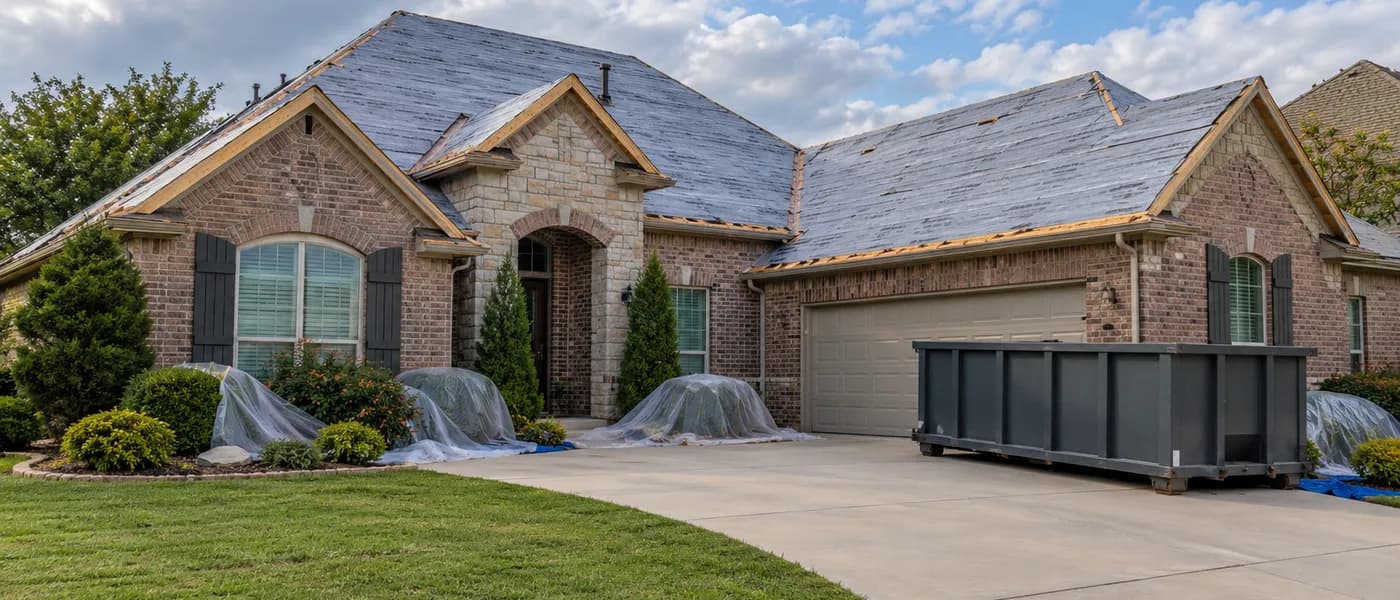
A roof replacement turns the area around your house into a work site. The disruption is easier to manage when the installer and household agree on access, deliveries, and boundaries before equipment arrives. Do not leave those decisions to whoever gets to the driveway first.
This checklist is for a full residential roof replacement in Tulsa. The contractor's instructions for your property take priority over a generic list, especially where the driveway is narrow, roof sections are complex, or someone in the household needs a clear access route.
Agree on deliveries and the debris container
Ask the installer to identify where materials and the container will go. Confirm vehicle access, surfaces that need protection, and whether the arrangement affects a garage door or an exit. Tell the contractor about drains, irrigation, utility access, or delicate surfaces that may not be obvious.
Photograph the driveway and nearby areas before delivery. This gives both parties a useful record of their starting condition. Ask who is responsible for moving vehicles and when you will be told that access needs to change.
Keep a household access route separate from work
Choose the door the household can use and confirm the route with the contractor. A path that is convenient in the morning may become part of the debris or delivery area later. Ask how the boundary will be communicated if the work setup changes.
- Tell the installer about mobility or access needs.
- Keep children and pets out of the work area.
- Arrange deliveries so visitors do not enter a controlled zone.
- Identify one contact for access questions.
- Ask before moving barriers or protective covering.
Move vulnerable items before the crew arrives
GAF's homeowner guidance recommends clearing exterior clutter and protecting fragile interior items from vibration and possible dust. Discuss your house with the installer rather than guessing which rooms will be affected most.
Store patio furniture, planters, toys, and decorations away from the planned work area. Ask how shrubs, outdoor equipment, and fragile finishes will be protected. Take down precariously balanced indoor items where vibration could dislodge them.
Discuss attic belongings and inspection access
If belongings are stored beneath the roof deck, ask whether they should be moved or covered and whether the attic should remain accessible for inspection. Tell the contractor about delicate items and any part of the attic that is difficult to enter safely.
Do not use this as an opportunity to climb into an unsafe attic. The contractor can explain the access they need and what you can arrange from a safe position. Our tear-off planning guide explains why exposing the deck may answer questions that an earlier visit could not.
Plan for noise and household routines
Ask the contractor what parts of the process are likely to be disruptive and how schedule updates will be shared. Plan remote meetings, naps, pet care, or access-dependent appointments around the information they provide.
A schedule is a plan that can change with conditions and findings. Ask what happens if delivery, weather, or concealed deck condition changes the sequence. You need a communication plan, not a promised completion time copied from another house.
Have a clear scope-change contact
Choose who can approve decisions while the roof is open. If more than one owner must agree, resolve that before installation. Ask for photographs and an explanation of unexpected findings before additional material is covered.
The new-roof scope checklist helps you put that process in writing. Availability by phone during the project does not mean approving every change without evidence; it means being ready to review what the contractor shows you.
Do not reopen the yard until cleanup is reviewed
Ask what cleanup includes and which areas will be checked for debris. Walk the agreed areas with the contractor when they say it is safe. Flag leftover material, displaced items, or access issues while the project contact is still available.
Our final walkthrough guide covers the records and property checks to request. A tidy driveway alone does not tell you whether the installation details were documented.
Preparing for the first call
Call Tulsa Roofing Pro to discuss full roof replacement with a participating provider. Explain driveway constraints, household access needs, pets, and any roof sections you want included. Provider participation and appointments depend on availability and the specific project.
Questions homeowners ask
Should I move my car before a roof replacement?
Agree on vehicle access and parking with the installer before deliveries. The driveway plan depends on the container, materials, and property layout.
Can my family stay at home during installation?
Discuss household needs, noise, safe access, and the work area with the contractor. Conditions vary by property and installation plan.
What should I do with attic belongings?
Ask the installer what should be moved or protected and which areas they need to access. Do not enter an unsafe attic to follow a generic checklist.