Attic Insulation and a New Roof in Tulsa
A new roof and attic insulation affect each other. Here is the order that works and the mistake to avoid.
Short answer: a roof replacement and attic insulation are two different jobs that affect each other. The roof sets how much air can move through the attic, and the insulation sets how much heat gets down into the house. Plan them together, but do them one at a time, and make sure the insulation never blocks the vents the new roof depends on.
Why Tulsa Attics Get So Hot
Oklahoma summers load a roof with heat for months. On a sunny afternoon the roof deck and the attic below it get far hotter than the air outside. That heat has two ways to go: out through the attic vents, or down through the ceiling into the living space. Ventilation handles the first path. Insulation and air sealing handle the second. We cover the airflow side in our roof ventilation guide.
What a New Roof Gives You a Chance to Check
- Intake vents. Soffit vents are often painted over, blocked by old insulation or missing. A replacement is a good time to confirm each rafter bay can breathe.
- Exhaust. Ridge vents, box vents and fans should work as a set. Mixing types can short-circuit the airflow.
- Deck condition. Dark staining or damp-looking boards from the underside can point to poor airflow or a leaking penetration. See decking and underlayment.
- Bath fan and dryer ducts. These should vent outside, not into the attic.
A Sensible Order of Work
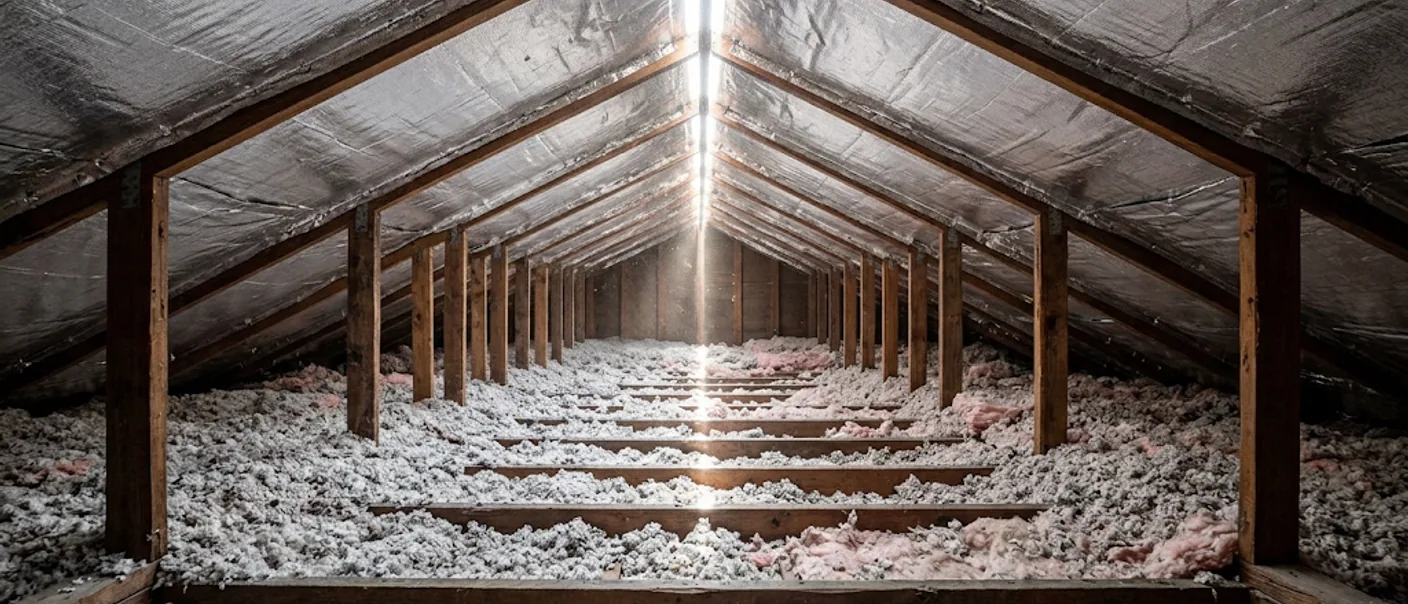
- Look at the attic first. Check the vents, the depth and condition of existing insulation, and any light coming through the ceiling plane.
- Replace the roof. Tear-off, decking checks, underlayment, flashing, shingles and vents. See our replacement timeline.
- Air seal the ceiling. Gaps around light fixtures, wiring and plumbing let attic air leak into the house. Sealing them is generally done before adding insulation.
- Add or increase insulation. With baffles at the eaves and clearance around any flue or recessed fixture that requires it.
- Walk it again. Confirm daylight is visible at the soffit vents from inside the attic.
What About Utility Programs?
Utilities and other organizations sometimes run programs for attic insulation or air sealing. They change from year to year, they often have their own steps and eligibility rules, and some require work to be done by a participating provider. Because the details change, check your electric utility's website or phone line first, and ask before the work starts whether it affects your plans.
Color, Materials and Attic Heat
Shingle color and material change how much heat the roof absorbs, but they do not replace ventilation or insulation. If you are choosing between options, read roof color and heat in Tulsa and roofing materials for the Tulsa climate. Our roof replacement page explains what the process includes.
Signs the Attic Needs Attention
- Upstairs rooms that stay noticeably warmer than the rest of the house in summer.
- Frost or damp patches under the roof deck in winter, which can point to moist air reaching the attic.
- Insulation that is flattened, uneven or missing in places.
- Shingles that age unevenly on one slope, which can reflect heat or airflow differences.
None of these is a diagnosis on its own. They are reasons to go up into the attic with a flashlight, or to have someone look who understands both roofs and insulation.
Who Does What
Roofers replace roofs. Insulation and air sealing are usually a separate trade, and not every roofer offers them. That is fine. What matters is that the two crews know about each other so the roofer does not close off a vent the insulation crew needed, and the insulation crew does not block the vents the roofer just installed. Ask your roofer what they plan for ventilation, and share that plan with whoever does the insulation. Our scope checklist covers what a good roofing scope includes.